

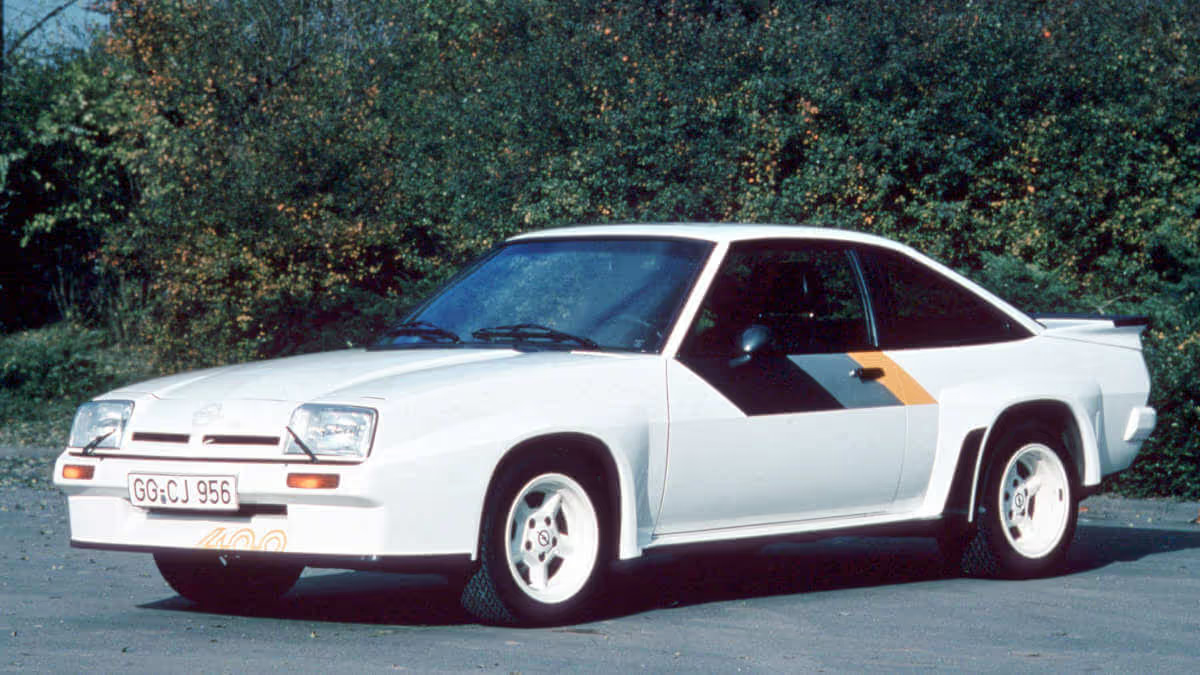
The People's Coupe That Never Faded
Plenty of cars from the 1970s and 80s have quietly disappeared. The Opel Manta B is not one of them. Produced from 1975 into the late 1980s, it became a fixture of the European enthusiast scene and has stayed there ever since - turning up at meets, on track days and in workshops long after far more expensive rivals were forgotten.
Affordable, Tunable, Everywhere
The Manta B succeeded because it was honest. Rear-wheel drive, a familiar CIH engine, simple mechanicals and a body that looked far sportier than the price suggested. It was attainable when new and stayed attainable, which meant generations of builders learned their craft on one.
Why the Following Endures
1. It is a blank canvas.
From mild road cars to full rally-inspired builds, the Manta B takes modification well and wears almost any style convincingly. No two seem to be built quite the same.
2. The parts pool is deep.
Sharing so much with the wider Opel range means engines, gearboxes and running gear are well understood and reasonably available, even now.
3. It has motorsport in its blood.
The Manta earned a serious rallying reputation, and that heritage still draws builders who want a car with genuine competition pedigree.
4. The community is unusually strong.
Clubs, forums and meets across Europe keep knowledge alive and parts changing hands - the backbone of any lasting enthusiast scene.
5. It is simply likeable.
There is a directness to driving a light, rear-drive coupe with a torquey straight engine that newer cars rarely match.
What the Faithful Love
- Rear-wheel-drive balance: the handling character at the core of the appeal.
- CIH power: a torquey, tunable engine shared with the wider range.
- Rally heritage: genuine competition history behind the badge.
- Strong clubs: an active community that keeps the cars on the road.
- Distinctive looks: instantly recognizable in any car park.
If You Want One
- Check for rust: arches, sills and floors are the usual trouble spots.
- Values are climbing: good examples no longer count as cheap.
- Join the community first: the best cars often change hands privately.
- Decide road or rally: the two builds pull in different directions.
The Bottom Line
The Manta B endures because it offers everything an enthusiast actually wants - simplicity, character, tuning potential and a community that refuses to let it fade. That is why, decades after the last one left the line, builders are still coming back to it.
Some cars are loved. The Manta B is kept.
Building an Opel? Join our SMS list for updates.

Reference for the Opel building community.